Capturing Energy
from Landfilling
Harnessing Waste’s Power
Trash impacts all of us, every day, in every community. Understanding how waste moves through our world helps us appreciate the many people, systems, and technologies working behind the scenes to protect public health, conserve resources, and preserve our environment. Together, these interconnected roles create The Waste Ecosystem.
The History of Landfill Gas-to-Energy
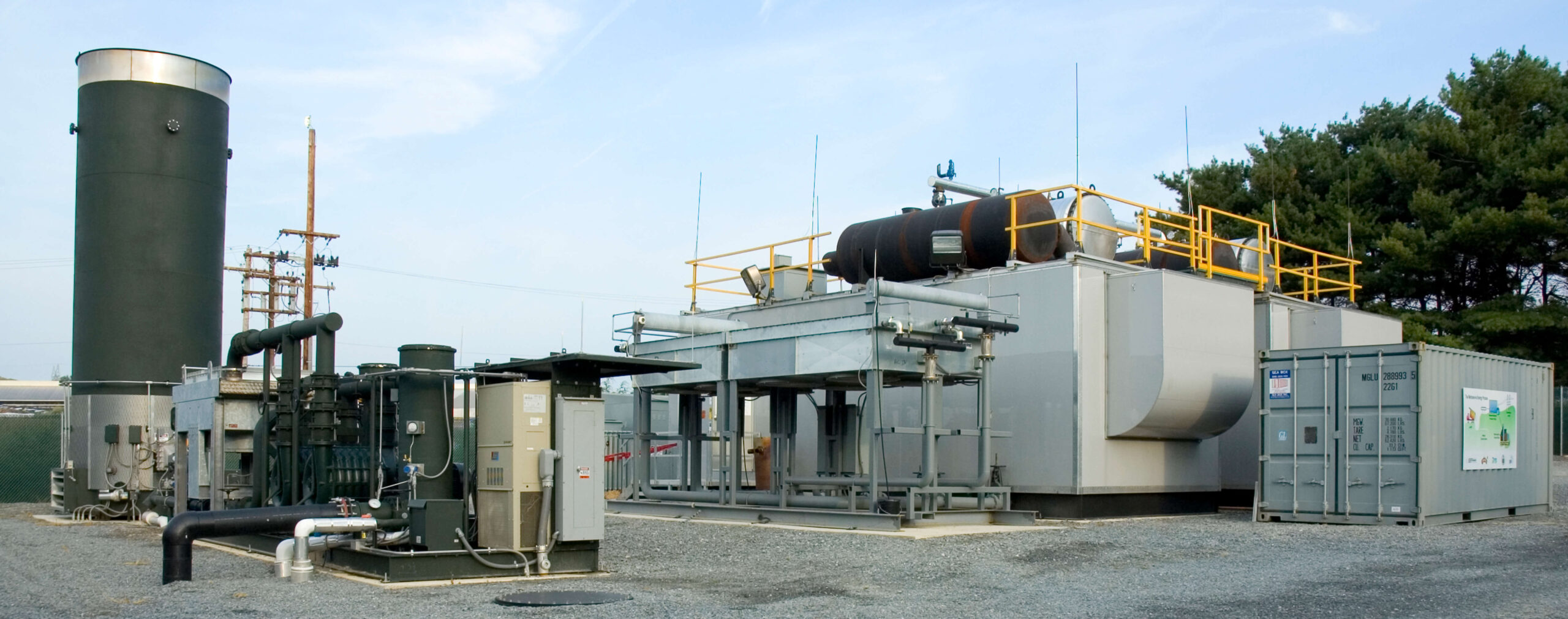
Landfill gas-to-energy (LFGTE) emerged in the 1970s and 1980s as communities and engineers sought ways to reduce greenhouse gas emissions and capture energy from our growing waste streams. Early projects demonstrated that methane (a potent byproduct of waste decomposition) could be collected and used as a reliable fuel rather than released into the atmosphere. Since that time, LFGTE has grown into a mainstream sustainable energy solution across the U.S. and the world. Today, thousands of landfills capture and convert methane for energy. LCSWMA established its LFGTE plant in 2005, and the 3.2 megawatt project exports to the PJM energy grid. Our plant, operated by NextEra Renewable Fuels, provides waste steam to Turkey Hill Dairy for its daily operations.
How It WorksThe Process of LFGTE
- As organic materials in landfills break down, they produce landfill gas (consisting of roughly 50% methane, and a mix of 50% carbon dioxide and water vapor).
- Beneath the surface, the gas is collected through a network of pipes, with major particulates and water removed to create clean gas.
- The clean gas is piped to two Caterpillar 3520 engines housed in sound-attenuated enclosures, generating 3,200 kilowatts of electricity.
- The electricity produced is transformed to a higher voltage and sent to the power grid via nearby utility lines.
- When the engines are offline, the gas is safely burned in an enclosed flare to ensure complete destruction.

Powering our CommunitiesWant to dispose of your waste at our Landfill?